What is the Home and Community-Based Services (HCBS) Settings Rule?
CHOICE, EMPOWERMENT & COMMUNITY
You receive many services because of the Lanterman Act, which are mostly funded by state and federal money through the Centers for Medicare and Medicaid Services (CMS). As a result, California must follow the Home and Community-Based Services (HCBS) Settings Rule, which sets standards for settings where you live or receive services.
These rules ensure that you receive services in places that are part of the community, where you can fully engage in everyday life. This means having the opportunity to find a job, work alongside others, join community activities, manage your own money, and receive services just like people who don’t use Regional Center services. The focus is on your personal experience, not just the physical place where you receive services.
You also play an active role in creating your own plan, which reflects your needs and what matters most to you.
Home and community-based settings, such as residential facilities or day programs, should support your needs and goals. These rules help ensure those places provide the right environment for your participation and well-being.
You should have a variety of options when it comes to services and service providers. You also have the right to be involved in the community—whether that’s shopping, going to church, eating out, or working. It’s important that you understand your rights.
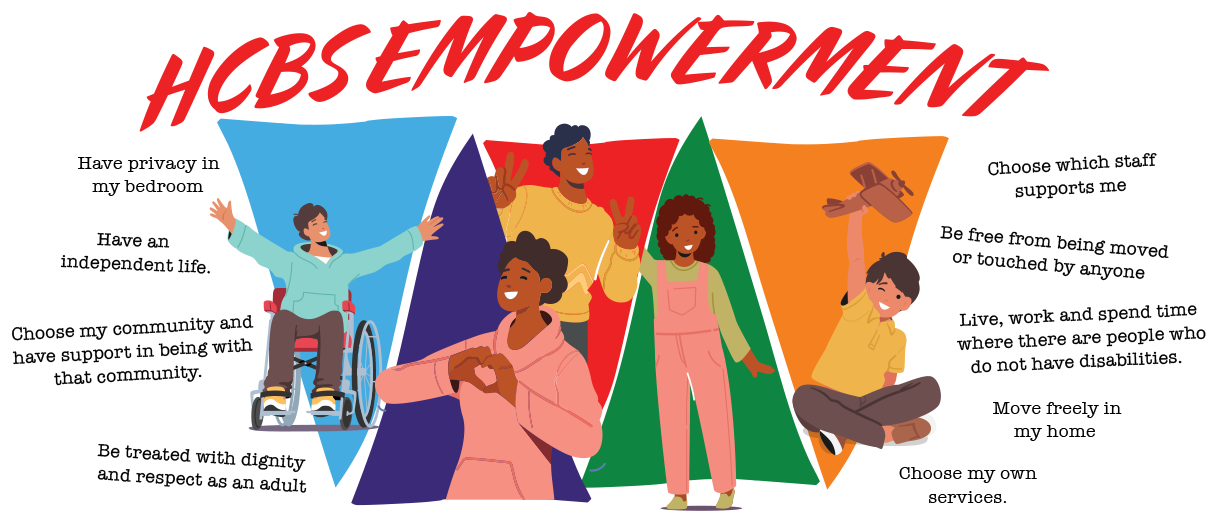
What HCBS means to me
“What HCBS means to me is that I have rights and I have my own choices to live my life how I want to live my life. What it means to me is that we all have voices and we all have choices in life, and with our choices, we can succeed in life. HCBS teaches the importance of how to advocate for yourself and make your own choices in life. Your voice matters! Don’t be silent, and always stand up for what you believe in. HCBS teaches that your voice does matter.”
– AAC member Atayvia Roberts
“My opinion about HCBS is that the services you receive should bring you satisfaction and fulfillment. Service opportunities are out there. It’s your chance to say “yes.” The community you choose to go out to, the things you can independently do (shop, eat, work, see your friends) should bring you joy.”
– AAC President Renard Stanford
Deaf / Hard of Hearing Plus
(D/HH+) Individuals
You have the right to inclusion, accessibility, and full participation in your community. You deserve the same opportunities as everyone else, and you can take action to make sure your needs are met. You can request communication support, like assistive communication devices (ACC), and access the accommodations provided under the Americans with Disabilities Act (ADA). These tools and supports exist for you—use them confidently. You can also take an active role in helping your community understand Deaf culture, so others recognize and respect why you may have specific needs. Your voice matters, your rights matter, and your presence makes a difference.
In Residential Settings:
Resident Council Meetings
You have the right to take part in your residential community and to have your voice heard. One way you can do this is through Resident Council Meetings. These meetings give you a chance to share your ideas, concerns, and suggestions about your living environment.
If you don’t know if your home has Resident Council Meetings, or if you don’t know what they are, you can still speak up. You can ask your staff or Service Coordinator to explain how you can participate. You have the right to a space where you can suggest improvements, raise concerns, and help make sure your home works well for everyone living there. You can attend, speak up, and help make decisions that affect your daily life. The staff and administration are required to listen and consider what you say.
In Residential Settings:
House Values
You also have the right to know and help shape the House Values of your home. House Values are the shared principles that guide how everyone in the house treats each other and lives together. They are different from house rules, which are things you must follow.
House Values reflect respect, kindness, privacy, and teamwork. You can help define what is important so that your home is a safe, welcoming, and supportive place for you and everyone else.
By participating in Resident Council Meetings and helping create House Values, you take an active role in making your home a better place to live. Your voice matters, and your opinions help make sure your community reflects the people who live there. You have the right to these opportunities under the HCBS settings rule, and using them helps your home respect your individuality, dignity, and preferences.
What to Do if Your Rights Are Not Being Respected
You have the right to be safe, respected, and included in your home and community. You also have the right to get the supports promised under the HCBS settings rules. If you feel like your rights are not being followed, here’s what you can do:
- Notice what’s happening
Pay attention to what doesn’t feel right. Write down what happened, when it happened, and who was involved. Keeping notes makes it easier to explain the problem. - Talk to someone you trust
You can start by talking to a staff member, case manager, or someone at your regional center. Tell them clearly what is happening and why it doesn’t feel right. - Ask for help
You don’t have to do this alone. Ask a family member, friend, or advocate to help you. They can go with you to meetings, help you write things down, or speak for you if you need support. - File a complaint if needed
If talking doesn’t fix the problem, you can file a formal complaint (sometimes called a grievance) with your regional center. Ask someone you trust to help you fill out the form, so your concern is officially heard. - Follow up
You have the right to know what happens after you report a problem. Check in to see what steps are being taken to fix it. - Remember your rights
Your voice matters. You have the right to speak up, get support, and make sure your home and services are safe, fair, and respectful. Speaking up helps protect your rights and makes your community better for you and everyone living there.
SCLARC HCBS Program Evaluators
HCBS Program Evaluators are the people who check that your home and services meet HCBS settings rules. They make sure you have the supports, choices, and protections you are entitled to.
If you have questions, concerns, or want to report that your rights are not being respected, you can contact your HCBS Program Evaluator. They are there to help you and make sure your home is safe, respectful, and supportive.
Contact Information:
You can reach out to them if you feel your rights are not being followed, if your home does not have Resident Council Meetings, or if you need help making sure House Values are respected. Remember, your voice matters, and the evaluators are there to listen and support you.